Author: High Rise Ink

  • Sgt. Brett Carleton Obituary: Colleagues and Community Remember a Dedicated Police Officer

    Sgt. Brett Carleton Obituary: Colleagues and Community Remember a Dedicated Police Officer

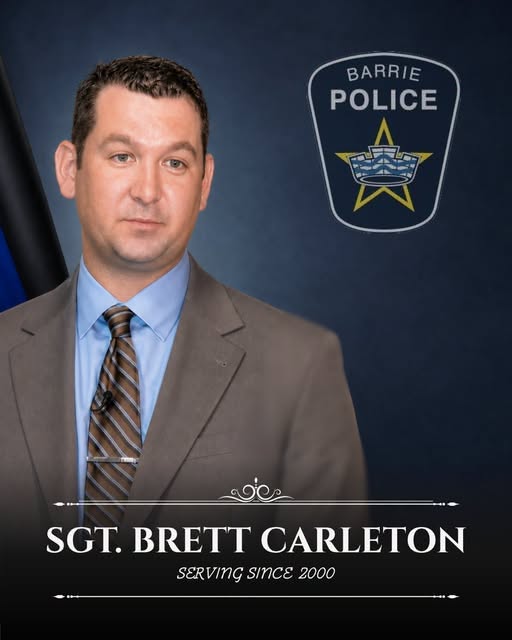
    For the colleagues who served alongside him and the families he helped during some of their most difficult moments, Sgt. Brett Carleton is being remembered as a valued member of the law enforcement community whose career was shaped by service, responsibility and a commitment to helping others.

    Throughout his years in policing, Brett became part of a profession that demands courage, patience and compassion. Police officers regularly encounter people during moments of fear, uncertainty and crisis, and the ability to remain composed while offering assistance can make a lasting difference. For the people who worked alongside Brett, those qualities formed an important part of the professional he was.

    His colleagues remember the responsibilities that came with his position and the dedication required to carry them out. Serving as a sergeant involves leadership as well as the ability to work closely with fellow officers and members of the public. The role requires people who can be trusted to make difficult decisions while supporting those around them.

    Brett’s work also brought him into contact with families experiencing challenging circumstances. In those moments, an officer’s role can extend beyond investigation and procedure. Families may need information, reassurance and someone willing to guide them through an unfamiliar and painful situation.

    Those interactions are among the reasons Brett’s contribution is being remembered with respect. His service placed him in situations where compassion and professionalism mattered, and the families he encountered became part of the wider community he served.

    For his colleagues, Brett was more than his rank. Police departments are built around teamwork, and officers develop strong relationships through shared responsibilities, demanding calls and long hours. Working together in difficult circumstances can create bonds that last for years.

    Those relationships have made his reported passing particularly painful for people who knew him professionally. Former colleagues and friends may now find themselves remembering conversations, assignments and experiences they shared with him throughout his career.

    Beyond his professional responsibilities, Brett was also a person with a life outside the uniform. Family, friends and personal relationships provided another important part of his identity. Those closest to him will remember the individual behind the title of sergeant and the memories created away from police work.

    Details surrounding Sgt. Brett Carleton’s reported passing have not been fully established in the information currently available. Because of the limited confirmed details, specific claims regarding his cause of death or the circumstances surrounding it should not be made without confirmation from his family or an authoritative source.

    What can be recognized is the impact of a career devoted to public service. Law enforcement officers often encounter people during moments they never expected to experience, and their actions can remain with those individuals long after an incident has ended.

    Brett’s colleagues can reflect on the many occasions when he contributed to the work of his department and supported fellow officers. Every career in policing is made up of countless individual interactions, decisions and moments of service that may never become public but still matter.

    For families who encountered Brett through his work, his role may have been connected to some of the most difficult days of their lives. The professionalism and humanity shown by an officer during such circumstances can become an important part of how families remember that experience.

    The broader law enforcement community may also come together to honor his service. Police departments frequently rely on strong networks of support when dealing with loss, and colleagues can provide comfort to one another while remembering a fellow officer.

    For Brett’s loved ones, however, the loss is far more personal. They will remember family moments, friendships, conversations and experiences that cannot be reduced to his career. Those memories will remain important as they navigate grief.

    As people reflect on Brett’s life, his dedication to service stands out as a significant part of his legacy. His work placed him in a position to help others, and the people he encountered along the way became part of that legacy.

    The impact of a public servant is not always measured by awards or official recognition. Sometimes it is found in the families who remember that an officer treated them with dignity, the colleagues who appreciated his leadership and the people who benefited from his willingness to help.

    Brett Carleton’s reported passing has therefore prompted reflection among those who knew him. His colleagues remember a valued professional, while the families he served may remember someone who was present during difficult moments and carried out his responsibilities with care.

    As friends, colleagues and loved ones mourn, they will continue to share memories of Brett and the contribution he made during his career. Those stories can provide comfort and ensure that his professional dedication remains part of the community’s memory.

    Sgt. Brett Carleton will be remembered for his service, leadership and commitment to helping people during difficult circumstances. His reported passing represents a loss for those who worked beside him and those who knew him personally.

    The legacy of a police officer is ultimately found in the people he served and the colleagues with whom he shared the responsibility of protecting the community. For Brett, those relationships will remain an important part of the story told by those who knew him.

    As his loved ones and colleagues remember his life, they will continue to honor the service he gave and the people he helped throughout his career. His memory will remain with the community and with the families whose lives were touched by his work.
  • Ratko Mladić Obituary: Bosnian Serb General Dies in The Hague While Serving Life Sentence for Genocide

    Ratko Mladić Obituary: Bosnian Serb General Dies in The Hague While Serving Life Sentence for Genocide

    Ratko Mladić, the former Bosnian Serb military commander convicted of genocide, crimes against humanity and war crimes committed during the 1992–95 Bosnian War, has died while serving a life sentence at a United Nations detention facility in The Hague. His death was confirmed by a United Nations official on Thursday, August 27, 2026, after Serbian media first reported the news.

    Mladić was 84 and had spent the final years of his life in custody following his arrest in Serbia in 2011 after years of evading international justice. He was transferred to The Hague to face charges stemming from some of the worst atrocities of the Bosnian War.

    As commander of the Bosnian Serb Army’s Main Staff, Mladić became one of the most prominent military figures of the conflict. His forces were involved in campaigns that resulted in the deaths and displacement of large numbers of civilians, including the siege of Sarajevo and the 1995 Srebrenica massacre.

    The Srebrenica massacre remains one of the darkest chapters of the conflict. More than 8,000 Bosniak men and boys were killed after Bosnian Serb forces overran the United Nations-designated safe area. Mladić was ultimately held responsible for genocide and other crimes connected to the atrocities.

    In November 2017, the International Criminal Tribunal for the former Yugoslavia convicted Mladić on 10 charges, including genocide, crimes against humanity and violations of the laws or customs of war. He was sentenced to life imprisonment. His conviction and sentence were upheld on appeal in 2021, making the life sentence final.

    Mladić’s capture came after years as one of the most wanted fugitives from the former Yugoslavia. He was arrested in Serbia in May 2011 and subsequently transferred to The Hague, where he remained in detention while facing trial and later serving his sentence.

    His health deteriorated significantly during his years in custody. His defense lawyers had sought humanitarian release in 2026, arguing that he was suffering from serious and irreversible medical decline. A United Nations court ordered an independent medical assessment earlier in the year after concerns were raised about his condition.

    Reports of his death come after years of health problems and repeated hospitalizations. His death now closes the life of one of the most controversial and notorious military figures of the Balkan conflicts, while the consequences of the crimes for which he was convicted continue to be felt by survivors and victims’ families.

    For many Bosnians, particularly survivors and families of those killed at Srebrenica and elsewhere, Mladić’s name remains inseparable from the suffering caused during the war. His conviction was regarded internationally as an important moment in efforts to establish accountability for atrocities committed during the breakup of Yugoslavia.

    At the same time, his death has significance for international criminal justice. The case against Mladić represented years of investigation, prosecution and legal proceedings aimed at holding senior military leadership accountable for crimes committed during the conflict.

    Mladić’s death does not erase the historical record surrounding the war or the findings of the international tribunal. The judgments against him remain part of the legal record documenting atrocities committed during the conflict.

    As news of his death spreads, attention is turning toward his complicated and deeply controversial legacy. He will be remembered not as an ordinary military figure, but as a commander whose actions became central to one of Europe’s most devastating conflicts since the Second World War.

    For survivors and victims’ families, the focus remains on those who lost their lives and those whose lives were permanently changed by the war. The communities affected by the conflict continue to carry memories of the violence decades later.

    Ratko Mladić’s death in The Hague marks the end of the life of a man who spent his final years imprisoned for crimes that shocked the world. His conviction remains a landmark in international justice and a lasting record of the atrocities committed during the Bosnian War.

  • Saint-Simon Church Fire Today: Historic Catholic Church in Caraquet Area Destroyed in Aug. 24 Blaze

    Saint-Simon Church Fire Today: Historic Catholic Church in Caraquet Area Destroyed in Aug. 24 Blaze

    A historic Catholic church in the Saint-Simon area near Caraquet, New Brunswick, has been destroyed after a devastating fire early Monday morning, August 24, 2026. The blaze reduced the more-than-century-old Saint-Simon Church to a total loss, leaving residents mourning the destruction of an important landmark and gathering place in the Acadian community.

    Emergency crews were called to the religious building on Le Bouthillier Road at approximately 4:07 a.m., according to the Royal Canadian Mounted Police. Firefighters from Caraquet, Bertrand and Shippagan responded as flames spread through the wooden structure.

    The church was reportedly built in 1917 and was regarded as one of New Brunswick’s most significant wooden churches. Its long history made it an important part of the Saint-Simon community, where generations of residents had gathered for worship and major family occasions.

    Residents watched as the fire consumed the building. Firefighters initially attempted to contain the flames, but the fire eventually spread into the roof, making it impossible to save the structure. Reports said the building was ultimately considered a total loss.

    The destruction has been particularly painful because the church was much more than a physical building. It served as a place where members of the community gathered for Sunday worship, weddings, baptisms, funerals and other important occasions. For many residents, the building was closely connected to family memories and community traditions.

    Caraquet Mayor Bernard Thériault described the destruction as an enormous tragedy for the area. Residents have similarly spoken about the emotional impact of losing a landmark that had stood for generations and served as a central part of community life.

    The circumstances surrounding the fire also prompted an investigation. Initially, authorities described the blaze as suspicious. The New Brunswick Office of the Fire Marshal subsequently determined that the fire had been intentionally set. The church was unoccupied when the fire occurred, and no injuries were reported.

    Police have since arrested and charged a 68-year-old Saint-Simon man in connection with the fire. The RCMP identified him as Gilles Mallet and said he was charged with arson. He appeared in Bathurst Provincial Court and was remanded in custody, with another court appearance scheduled for August 28. The investigation remains ongoing.

    Authorities are continuing to ask anyone who may have been in the area around the time of the fire or who has information that could assist investigators to contact the Caraquet RCMP detachment.

    For residents, however, the immediate concern is the loss of a treasured part of their heritage. The church’s destruction means that a building that had witnessed generations of baptisms, marriages, funerals, religious celebrations and community gatherings is no longer standing.

    The fire has also highlighted how deeply historic buildings can be connected to people’s personal histories. Residents who grew up attending services there or celebrating major family milestones inside the church are now left with memories of a place that had been a constant presence in their lives.

    Although the physical structure has been destroyed, its significance to the Saint-Simon community will not disappear. The memories created there will remain with the families and generations who considered the church an important part of their lives.

    The August 24 blaze has therefore become more than a fire report for the Caraquet-area community. It represents the loss of an important piece of local history and a place that served as a spiritual and social center for generations.

    As the investigation continues and the community considers what comes next, residents are left to mourn the destruction of Saint-Simon Church while remembering the role it played in the history and identity of their community.