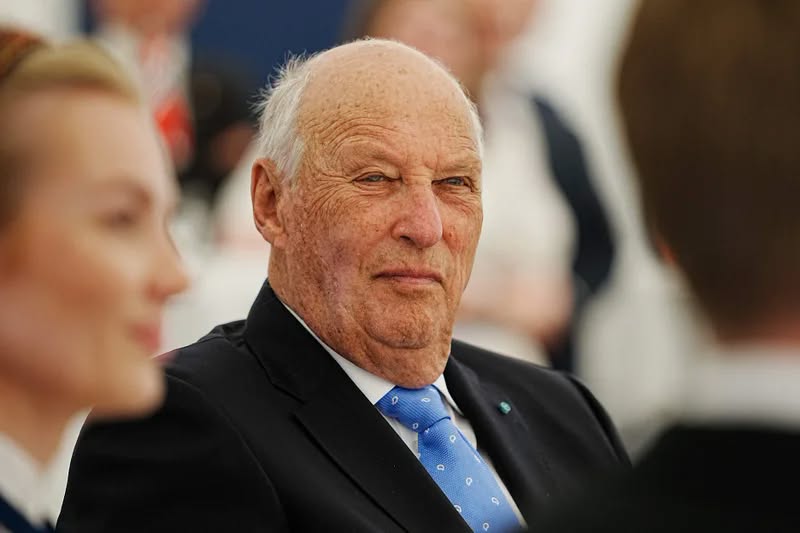
King Harald V of Norway has died at the age of 89, bringing an end to a more than three-decade reign that saw him become one of Europe’s most respected and enduring monarchs. His death on Friday, August 28, 2026, has prompted an outpouring of grief across Norway and messages of condolence from royal families, political leaders, the European Union, and NATO.
The Royal Palace confirmed that Harald died peacefully at Oslo University Hospital at 6:35 a.m. local time. He had recently been hospitalized after suffering health complications, including a bacterial infection, and his condition had become increasingly serious in the days before his death.
Harald became King of Norway in January 1991 following the death of his father, King Olav V. Over the next 35 years, he developed a reputation for warmth, humility, and an ability to bring people together. His reign covered a period of significant social and economic change in Norway, while he worked to give the traditionally ceremonial monarchy a more modern and inclusive character.
Norwegian Prime Minister Jonas Gahr Støre said the entire nation was mourning and expressed gratitude for Harald’s long service. He praised the late monarch’s faith in the Norwegian people and his ability to help the country recognize the best in itself and others.
King Charles III was among the first international figures to pay tribute. Charles described Harald as his “dear cousin” and remembered him as a towering figure who served Norway with dedication, warmth, and humility. The British monarch also highlighted Harald’s kindness, compassion, and deep sense of duty, saying his family would remember him as a much-loved relative and friend.
NATO Secretary General Mark Rutte also expressed condolences, recognizing Harald’s military background and describing him as a dedicated leader and a longstanding friend of NATO. The alliance’s relationship with the Norwegian monarch reflected his country’s important role within the organization.
European Commission President Ursula von der Leyen praised Harald as a true European who served Norway for more than three decades with warmth, humility, and an unwavering sense of duty. She also emphasized his role in bringing Norwegians together during both joyful and difficult moments.
Harald’s personal story also contributed to his popularity. Born in 1937, he was the first Norwegian-born heir to the throne in centuries. During World War II, he spent part of his childhood in the United States after his family fled Norway following the German occupation. He later became an accomplished sailor and represented Norway in Olympic competition.
His marriage to Sonja Haraldsen was another defining chapter of his life. The couple married in 1968 after a lengthy relationship that challenged traditional expectations surrounding royal marriages. They went on to raise two children, Crown Prince Haakon and Princess Märtha Louise.
Harald was also widely remembered for his emotional leadership during national tragedies, particularly following Norway’s 2011 terrorist attacks. His public expressions of solidarity and calls for openness and tolerance became an important part of his legacy.
Following his death, his son Crown Prince Haakon succeeds him as King of Norway. The transition marks the beginning of a new chapter for the Norwegian monarchy while the nation mourns a king who spent 35 years serving his country.
As flags are lowered and Norwegians gather to pay their respects, King Harald V leaves behind a legacy defined by service, national unity, humility, and a close relationship with his people. His death marks the end of an era for Norway and the loss of a monarch whose influence extended well beyond the royal palace.
Leave a Reply